While You're Clipping Digital Coupons, Your Boss Is Holding a Check With Your Name On It
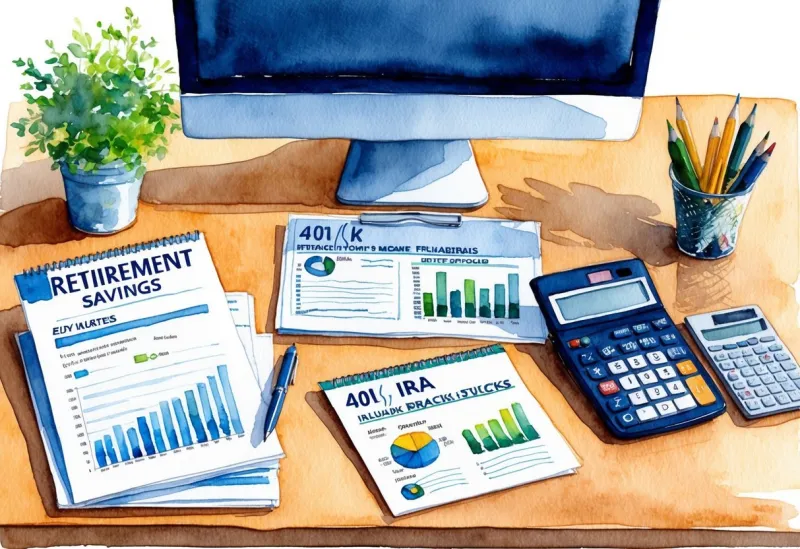
Photo: paycheck with 401k retirement savings documents on desk, via koala.sh
Let me guess your last hour of 'money work.' You compared two cashback apps. You checked whether the grocery store's digital coupons stacked with your card. Maybe you even read a Reddit thread about whether 2% back on gas beats 3% back on groceries.
Good stuff. Genuinely. We're a rewards site — we love that stuff.
But here's the uncomfortable question: while you were optimizing pennies, did you check whether you're leaving dollars — hundreds of them, every single paycheck — sitting in your employer's 401(k) plan?
Because if you're not contributing enough to get your full company match, that's exactly what's happening. And no cashback category, no coupon hack, no side hustle on Earth can compete with it.
The Math That Should Ruin Your Day
The average employer match in the US hovers around 3% to 6% of your salary. A common setup looks like this: your company matches 50 cents on the dollar up to 6% of your pay.
Say you make $55,000. Contribute 6% ($3,300) and your employer kicks in another $1,650. That's not a rounding error. That's a car insurance premium, a family's holiday budget, an emergency fund starter — handed to you for the 'effort' of filling out one form.
Now think about what it takes to earn $1,650 in cashback. At a typical 2% return, you'd need to spend $82,500 through the right portals, on the right cards, in the right categories. Nobody's doing that. Nobody.
And here's the kicker that makes personal finance writers pull their hair out: the match is a 100% instant return. You put in a dollar, a second dollar appears. Cashback gives you two cents on that same dollar. The match wins by a factor of fifty, before a single day of market growth even enters the picture.
'But I Can't Afford to Save Right Now'
Totally fair, and you're not alone — roughly one in five eligible employees doesn't contribute enough to capture their full match, according to Vanguard's ongoing research on retirement plans.
But notice the trap here. If money's tight, the worst possible outcome is turning down free money. If you can only scrape together 3% instead of 6%, do that. A partial match beats zero match. Then bump your contribution by 1% every time you get a raise — you'll never feel the difference because you never got used to the money.
One more myth to kill: a 401(k) is not a locked vault until you're 65. The money grows tax-deferred, and plenty of plans allow loans or hardship withdrawals in true emergencies. And since 2022, employers can even add matching contributions toward your student loans at some companies. This isn't a boomer-only product anymore.
Your Five-Minute Action Plan
This takes less time than scrolling a cashback portal:
-
Find the match. Search your HR portal or benefits guide for 'employer match' or '401(k) matching formula.' If it's not clear, email HR and ask one question: 'What's our matching formula, and am I contributing enough to get all of it?'
-
Set your contribution. Log into your plan provider (Fidelity, Vanguard, Empower — whoever it is) and raise your deferral to at least the full match threshold. That's the finish line.
-
Check the vesting schedule. Some companies make you stay a year or two before the match is truly yours. Good to know, especially if you're job-hunting — unvested money is one more reason to time a departure carefully.
-
Automate the increases. Many plans offer an auto-escalation feature. Turn it on and your contribution climbs with each raise while you sleep.
-
Don't touch it. No early withdrawals, no raiding it for a vacation. This money has one job.
The Honest Caveat
Look, we're UBucks. We will never tell you to stop hunting cashback deals — stacking 5% categories on your grocery card is free money too, and we cover it every week. But there's a hierarchy here, and it's not close:
- 100% return: your employer match. Captured once, works for decades.
- 2–5% return: cashback, coupons, loyalty programs. Great, but they're the supporting cast.
If you only have limited 'money energy' this month, spend it on the match first. Then come back and let's talk about stacking your gas rewards.
Your next paycheck is coming either way. The only question is whether it arrives alone — or with your employer's contribution riding shotgun.